
How to Search Lake County Traffic Court Records
Lake County has no standalone traffic ticket lookup form on its court pages. Traffic case data flows through two official tools instead. The first is MiCOURT Case Search, the statewide judiciary portal that returns civil, traffic, criminal, and other case types for courts that participate. The second is the Lake County Trial Court online payment page, used to pay eligible tickets and court fees. Together they cover the common needs: check a case, then act on it.
Gather a few details before you start. The citation or ticket number is the fastest key. A driver name plus date of birth also works, and a court case number narrows the search when you have one. MiCOURT uses an hCaptcha check, so expect a quick "not a robot" step. If a record does not appear online, the district court staff can confirm it by phone.
- Open MiCOURT Case Search and accept the captcha prompt.
- Enter the ticket number, or search by the driver's name and date of birth.
- Filter by court or case type to reach the 78th District Court traffic file.
- Review the charge, hearing date, plea, disposition, and any balance owed.
- Pay through the Trial Court payment page, contest the ticket, or call for a certified copy.
Which Courts Handle Traffic Cases in Lake County
Traffic cases in Lake County route through the district court division of the Lake County Trial Court. That division is the 78th District Court, which covers Newaygo and Lake Counties. District courts in Michigan handle civil traffic infractions, most traffic tickets, and misdemeanor offenses, along with small claims and landlord-tenant matters. A felony-level traffic crime is different and moves to the 51st Circuit Court.
The court office sits inside the county complex in Baldwin. Staff there answer questions about mandatory appearances, not-guilty pleas, hearing dates, payment plans, and records that are not posted online. The after-hours line handles jury duty calls only.
| Court | Traffic Cases Handled | Contact |
|---|---|---|
| 78th District Court | Civil infractions, most traffic tickets, misdemeanor traffic offenses | 800 Tenth St, Suite 300, Baldwin, MI 49304; (231) 745-4614 |
| 51st Circuit Court | Felony traffic crimes and appeals from the district court | 800 Tenth St, Suite 300, Baldwin, MI 49304; (231) 745-4614 |
| Trial Court jury line | After-hours jury duty questions only | (231) 745-6240 |
Types of Traffic Cases on Record
Not every ticket carries the same weight. Some are civil infractions that end with a fine. Others are misdemeanors that can bring jail time and a criminal record. The district court file sorts them by charge and statute, which shapes the penalty and the points reported to the state.
- Civil infractions - minor moving violations like speeding or a stop-sign ticket, paid or contested without a criminal charge.
- Misdemeanor traffic - offenses such as driving while license suspended, handled as criminal cases in the district court.
- Non-moving and equipment - registration, parking, or equipment tickets that usually carry no points.
- Commercial vehicle and CDL - violations by drivers holding a commercial license, subject to stricter federal reporting rules.
- Felony traffic - serious matters like repeat drunk driving or an injury crash, filed in Circuit Court.
What Lake County Traffic Court Records Show
A traffic case file follows the structure set by Michigan Court Rule 1.109. The record identifies the court, the driver, the charge, and the outcome. It shows what the driver was cited for and how the case closed. Sensitive data such as a full date of birth or license number is protected in public filings.
The fields below appear in a typical Lake County traffic court record. Reading them in order tells the story of the ticket from the stop to the final disposition.
| Field | What It Shows |
|---|---|
| Citation / Case Number | The ticket number and the court case number that track the matter. |
| Charge / Statute | The cited violation and the Michigan Vehicle Code section behind it. |
| Plea / Admission | Whether the driver admitted responsibility, denied it, or pleaded to the charge. |
| Hearing Date | The scheduled informal or formal hearing, or the appearance date. |
| Disposition | The outcome: responsible, dismissed, reduced, or found not responsible. |
| Fine and Costs | The dollar amount owed and any remaining balance. |
| Bench Warrant / FTA | A failure-to-appear flag or bench warrant status when it is public. |
Searching by Citation Number vs by Name
Two paths lead to the same case. A citation number points straight to one ticket and avoids mix-ups. A name search casts wider and can return several people who share a common name, so a date of birth helps narrow it. For payment, the Lake County Trial Court page spells out exactly which fields the AllPaid system needs.
The payment tool uses the office prepay code 1415 for the Lake County Trial Court. Enter the driver's full name, date of birth, and either the case number or the ticket number, then the amount. The table shows each field and its format.
| Field Label | Type | Required | Notes / Format |
|---|---|---|---|
| Office to Prepay PLC | Payment code | Yes | 1415, Lake County Trial Court. |
| Defendant Name | Text | Yes | First, middle, last. |
| Date of Birth | Text / date | Yes | MMDDYYYY format. |
| Case # | Text | Yes if available | Court case number. |
| Ticket # | Text | Yes for citation payment | Ticket or citation number. |
| Payment Amount | Currency | Yes | The amount to pay. |
Paying or Contesting a Lake County Traffic Ticket
Start with the citation itself. It names the court, the ticket number, the appearance date, and whether an appearance is required. Some tickets can be paid outright. Others, like a misdemeanor charge, demand a court date. Missing a deadline can add a failure-to-appear flag and a license hold, so acting early matters.
Getting to the courthouse for an in-person hearing can be a hurdle in a rural county. The Yates Dial-A-Ride demand-response service carries Lake County residents and visitors around the area.
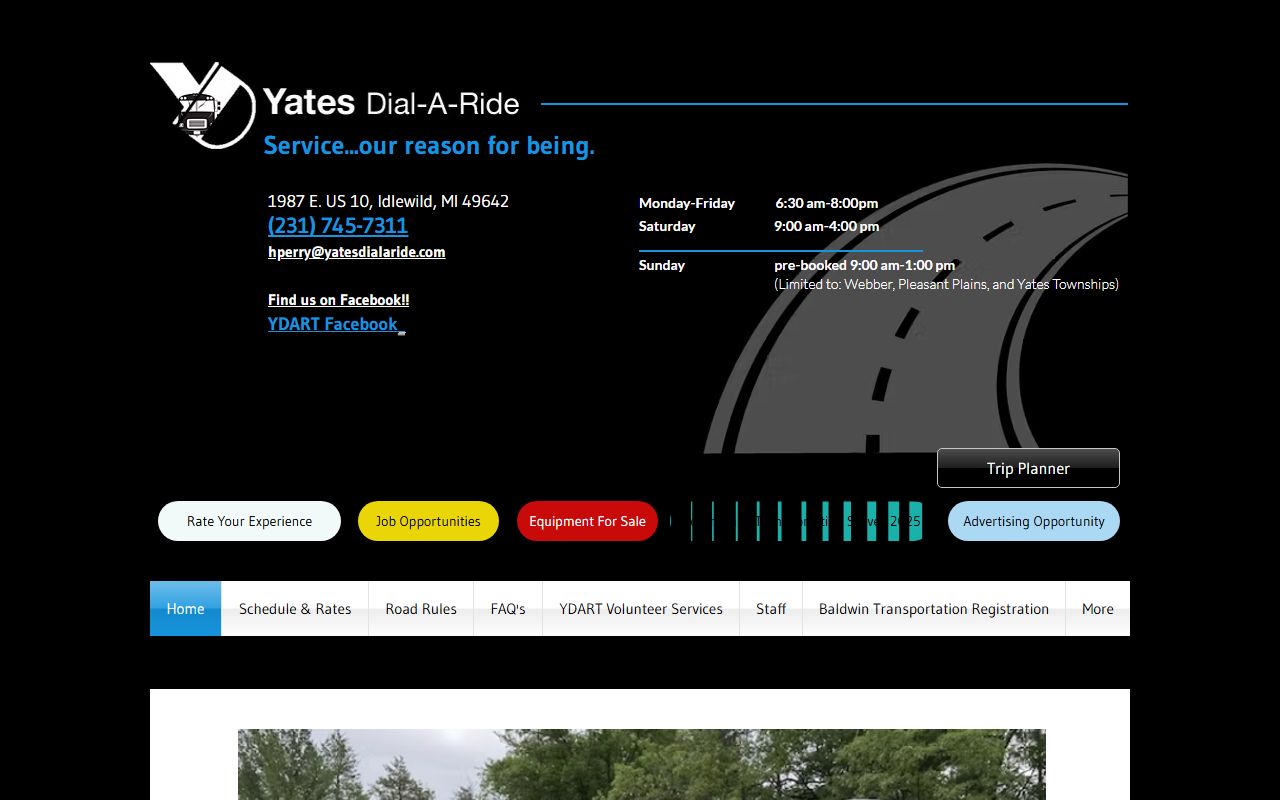
That transit option helps drivers who must appear in Baldwin for a not-guilty plea or a formal hearing. The steps below outline the full path from reading the ticket to confirming the case is closed.
- Read the citation to find the court, ticket number, appearance date, and whether appearance is mandatory.
- Search MiCOURT or call the district court at (231) 745-4614 to confirm case status.
- To pay, use AllPaid with prepay code 1415 and enter the name, date of birth, case number, ticket number, and amount.
- To contest, contact the district court before the deadline and follow its steps for a not-guilty plea or a hearing.
- Keep the receipt and verify that any license hold, points, or failure-to-appear entry is cleared.
Public Access Laws for Traffic Court Records
Michigan treats court files as public unless a rule or statute limits them. The Freedom of Information Act sets the state's open-records policy, while court rules govern how case files are kept and released. Traffic convictions also feed a separate points system that the vehicle code defines. A paid or dismissed ticket in the court file does not always mean the driver record is clear.
The points statute is the link between a court disposition and a driver's record. It is worth reading alongside any traffic case, since it explains how convictions translate into points held by the state.
The Michigan Vehicle Code points statute lays out how many points each conviction adds.
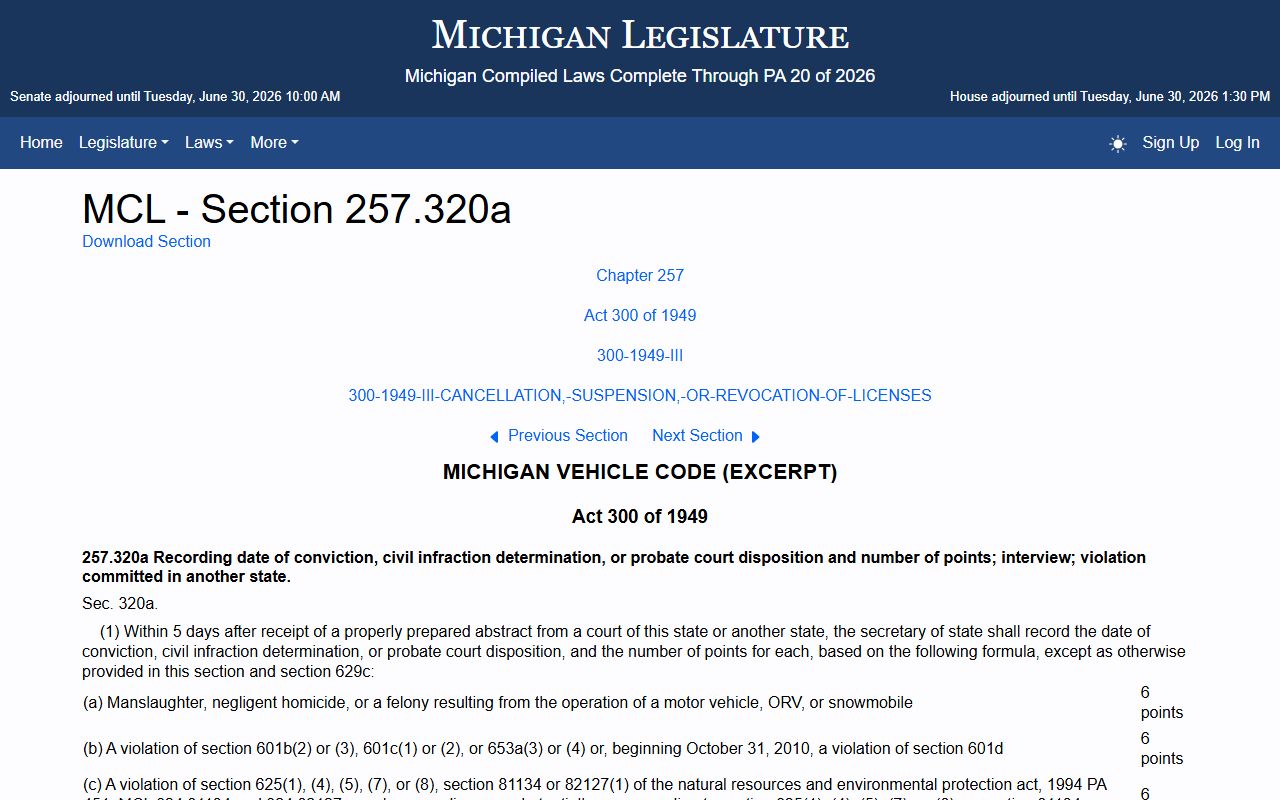
Reading that statute clarifies why two drivers with the same fine can face different license outcomes. Points, not the fine amount, drive many of those consequences.
Key Statutes:
MCL 15.233 - gives the public a right to inspect and copy public records unless an exemption applies.
MCL 257.320a - governs the points added to a Michigan driver record for traffic convictions.
Court Traffic Records vs Michigan Driver Records
These are two different files, and confusing them is the most common mistake drivers make. The court traffic record is the case file held by the Lake County Trial Court and searchable through MiCOURT. The Michigan driver record is a separate document kept by the Secretary of State that shows license status, points, suspensions, and convictions reported to the state. Fixing an error in one does not fix it in the other.
A certified driving record can be bought online through the state after creating a MiLogin account, and every record purchased at a Secretary of State branch is certified. Anyone buying a record for court or a job should confirm whether the recipient needs a certified copy.
The state driving-record service explains how to request and pay for a copy. See the Michigan Department of State driving record page for the current steps.
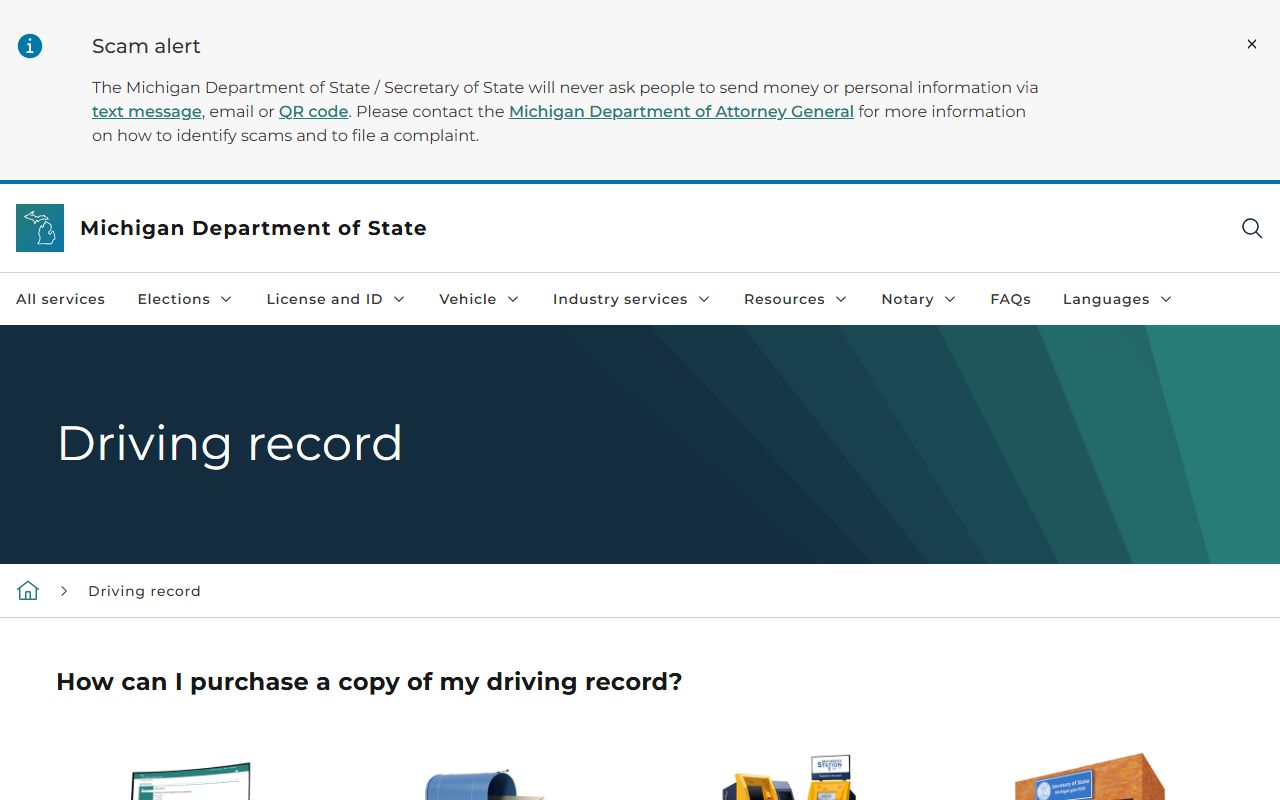
That page is the correct route for the driver record, while court disposition questions still go to the trial court. The comparison below sets the two files side by side.
| Point of Comparison | Court Traffic Record | Michigan Driver Record |
|---|---|---|
| Record source | Lake County Trial Court / 78th District Court | Michigan Department of State |
| What it shows | Citation, charge, plea, hearing, disposition, fine and costs | License status, points, suspensions, revocations, and reported convictions |
| Where to access | MiCOURT Case Search or the district court office | Secretary of State driving-record service or a branch office |
| How to correct errors | Contact the trial court that entered the disposition | Contact the Michigan Department of State |
CDL and Commercial Driver Records
Commercial drivers face tighter rules. A violation by a driver holding a commercial license is reported under federal standards, and the state cannot mask a CDL conviction the way it might for a personal license. That reporting follows the driver even for a ticket received in a personal vehicle.
Because of those rules, a CDL holder should treat any Lake County traffic citation as a matter for both the court file and the driving record. Confirm the disposition with the district court, then check the state record for the reported conviction and points before assuming the ticket is behind you.
DUI and OWI Cases
Operating while intoxicated is not an ordinary traffic infraction. In Michigan the charge is known as OWI, and it is prosecuted as a criminal case rather than a simple ticket. A first offense runs through the district court on the criminal side, and repeat or injury cases move to the 51st Circuit Court. The file includes arraignment, plea, and sentencing, not just a fine.
For the full case file on a drunk-driving or other serious traffic crime, the Lake County criminal court records page covers how those cases are charged, tried, and closed.
Sealing or Setting Aside Traffic Records
Michigan uses the term "set aside" for clearing an eligible conviction. Some convictions are set aside automatically after a waiting period under the state's Clean Slate law, while others require an application. Traffic matters carry important limits, so a driver hoping to clear a record should check eligibility carefully rather than assume the case will drop off.
Automatic set-aside does not reach several traffic-related categories. According to the Michigan State Police, it excludes OWI, certain CDL traffic offenses tied to a commercial vehicle, and traffic offenses that cause injury or death. A driver whose old case still shows up should check both the court file and the state driving record, since the two follow different rules.
The application route runs through MCL 780.621, and the automatic path is defined in MCL 780.621g. The Michigan Clean Slate program page lists the exact timing and exclusions.
Crash Reports and State Records
A crash report is yet another separate file. It is the accident report written by the responding officer, and it is not the same as the court ticket docket or the driving record. In Lake County these reports come through the Sheriff's Office CrashDocs link or a public-records request. The court file will show a resulting ticket, but not the full crash narrative.
Online state transactions for driver records run through the Michigan Department of State e-Services entry. It is the digital door to certified records and related driver services.
The Michigan Department of State e-Services portal handles online driver and record transactions.
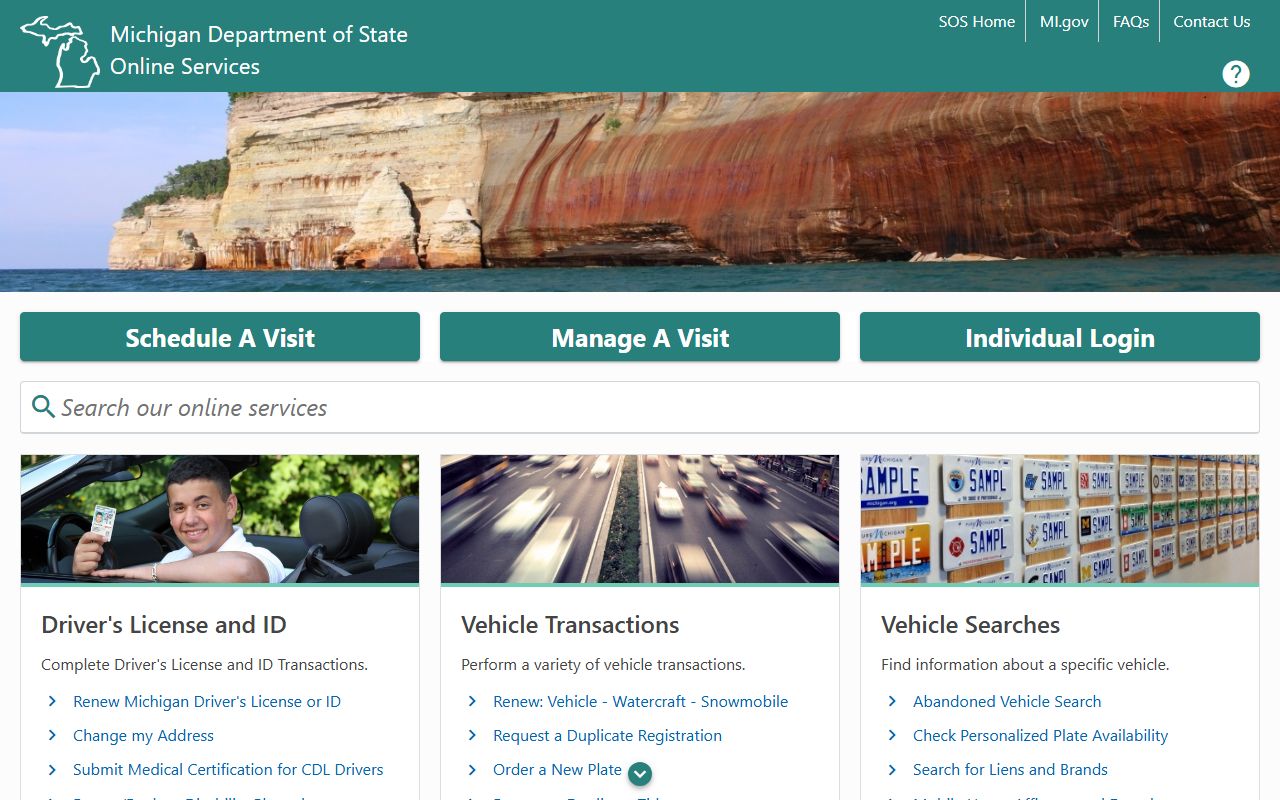
Using that portal keeps the driver-record request separate from the court case, which is exactly how Michigan intends the two systems to work. For a crash report, the sheriff or a Freedom of Information Act request is the correct channel.
Fees for Traffic Record Copies
Copies of a court file carry a modest charge, and a certified copy costs more than a plain one. Certified copies are the version courts and employers usually require. Fees below come from the Lake County fee schedules; exact certified case-copy charges for a specific traffic file are confirmed by the Trial Court office at (231) 745-4614.
| Item | Amount |
|---|---|
| Plain copy, per page | $1.00 |
| Certified copy | $5.00 plus the per-page copy charge |
| Court seal / certification | $10.00 |
| Public record computer search | No charge |
| Michigan driver record (state) | Purchased through the Secretary of State; branch copies are certified |
Note: The court traffic file and the state driver record are billed separately, so plan for two requests when you need proof from both offices.