
Lake County Arrest Records and Court Charges
An arrest record documents the arrest event itself. It notes the arresting agency, the date and place of the arrest, the booking at the jail, and the first charge an officer lists. In Lake County, the Sheriff's Office and its Detention Center in Baldwin handle that booking side. An arrest alone does not prove guilt. It marks the start of a process that may or may not lead to formal charges. The prosecutor, not the arresting officer, holds the power to decide the charges the court will act on.
The court charge record is a different thing. After an arrest, the Lake County Prosecutor reviews the police report and files a charging document with the court clerk. Those court charges after arrest list each offense, the statute behind it, and the severity level. Booking details and current custody status stay with the jail, so the Lake County inmate records cover the roster and booking side. The filed charges, hearings, plea, and outcome build into the full case file, which the Lake County criminal court records track from start to finish.
How to Find Lake County Arrest Records and Charges
Filed charges show up in the court case index, not a mugshot gallery. The main portal is Michigan's MiCOURT Case Search, which covers criminal, traffic, civil, domestic, and probate cases for participating courts. A Lake County case may link a name to the charges, hearing dates, judge, and status when the record is public. Booking and custody status are not in MiCOURT, so the jail roster is the place for that side.
- Open the MiCOURT Case Search portal and accept the terms of service.
- Complete the robot verification, then search by a party name or case number.
- Click the file number to open the case and read the charge list.
- Check each charge's statute code, severity level, and current status.
The Lake County Trial Court also runs an online payment page tied to a case, shown on its Trial Court bill-pay page.
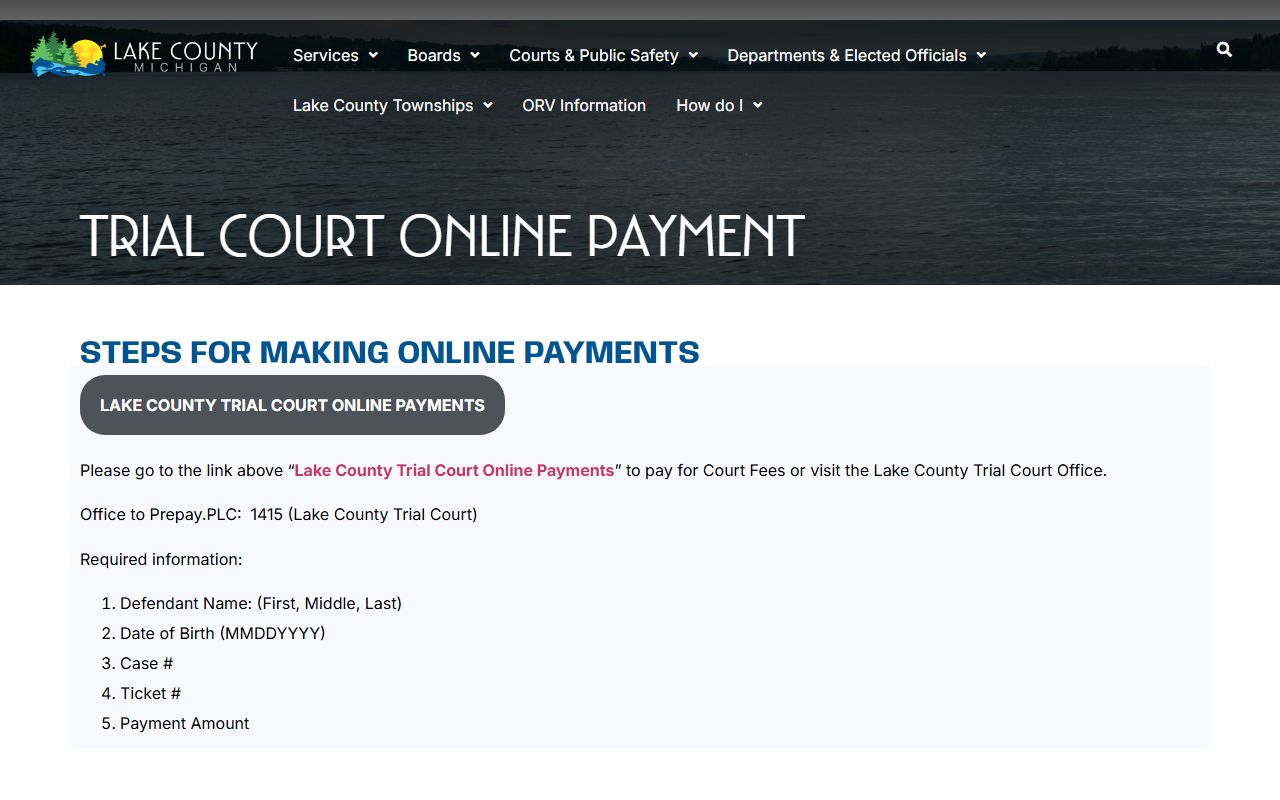
Fines, costs, and restitution attached to filed charges are paid there once a case reaches that stage. Some records never appear online. Certified copies, sealed-document questions, and files older than the online index go through the Lake County Trial Court office by phone, and the court clerk keeps the official file even when the public portal shows only a summary.
How Charges Get Filed After an Arrest: Complaint, Information, and Indictment
The court charge record begins when the prosecutor files a charging document. In Michigan, counties have a Prosecuting Attorney rather than a district attorney. The Lake County Prosecutor's Office reviews warrant requests from police, weighs the evidence, and decides which charges to authorize. The office sits at 800 Tenth Street, Suite 100, in Baldwin, and its phone line is (231) 745-2775. A charging document names the defendant, lists each offense, and cites the statute for every count.
The Lake County Prosecutor's Office page describes the office that authorizes and files those charges.
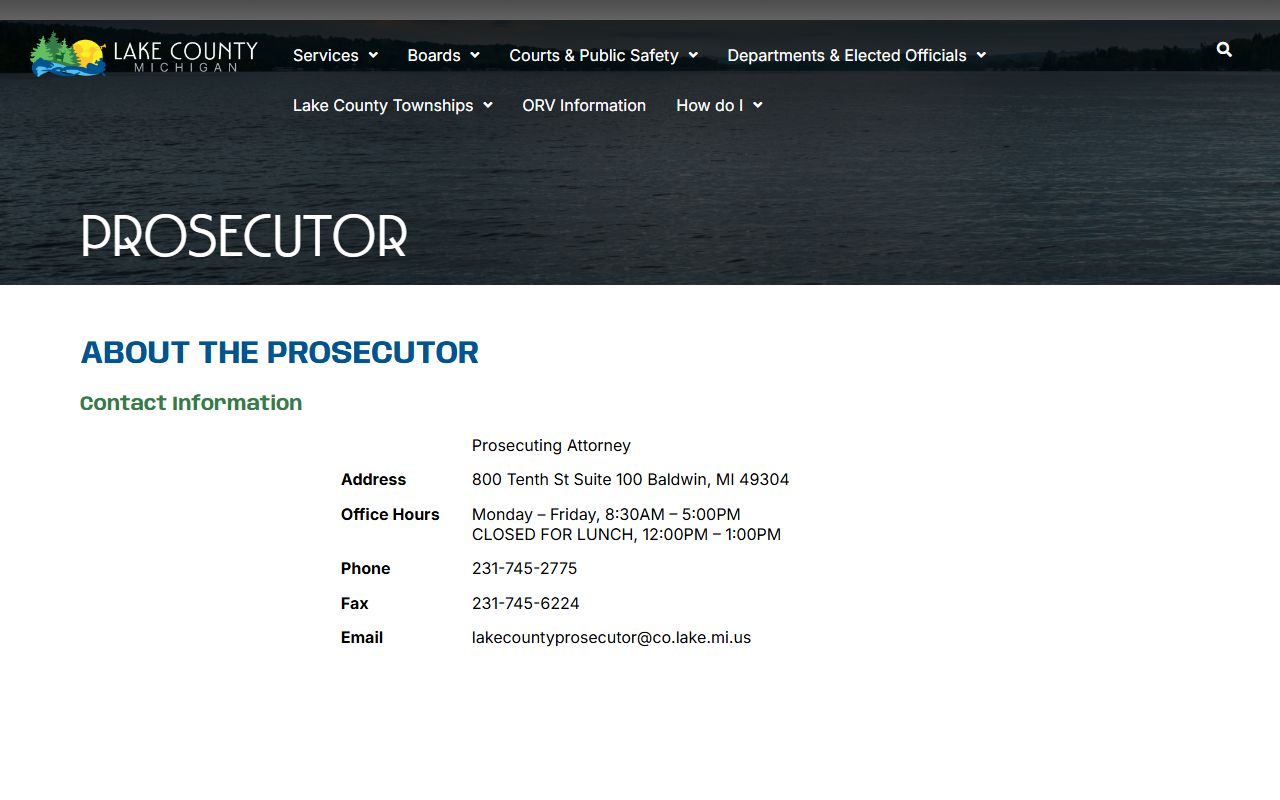
That office, not the arresting deputy, decides whether an arrest turns into a filed court charge. Three charging documents can start a criminal case. A complaint is a sworn document that, paired with a warrant, opens most misdemeanor cases and the early felony stage. For felonies, Michigan uses the complaint and warrant first, then the prosecutor files an Information after the district court binds the case over to Circuit Court. An indictment comes from a grand jury and is rare in Michigan practice.
| Complaint | Information | Indictment | |
|---|---|---|---|
| Filed By | Officer / prosecutor | Prosecutor | Grand jury |
| Common For | Misdemeanors, early felony stage | Felonies after bindover | Rare in Michigan |
| Starts | Most cases | The felony case in Circuit Court | A case by grand jury |
Note: In 2025 the Michigan Attorney General's Office supported Lake County prosecutions during a vacancy, and attorney Thomas Evans was appointed county prosecutor effective October 7, 2025.
Lake County Charge Status and What It Means
Charges are not fixed once filed. As a case moves, the prosecutor may amend a count, reduce a felony to a misdemeanor, add a charge, or drop one. A judge can dismiss a charge for legal reasons. The docket shows each change, so the charge status on the record can differ from the charge listed at booking. A missed court date can also trigger a bench warrant, which the docket may flag.
Many Lake County misdemeanor and traffic charges run through the 78th District Court, which serves Newaygo and Lake Counties, as its District Court page explains.
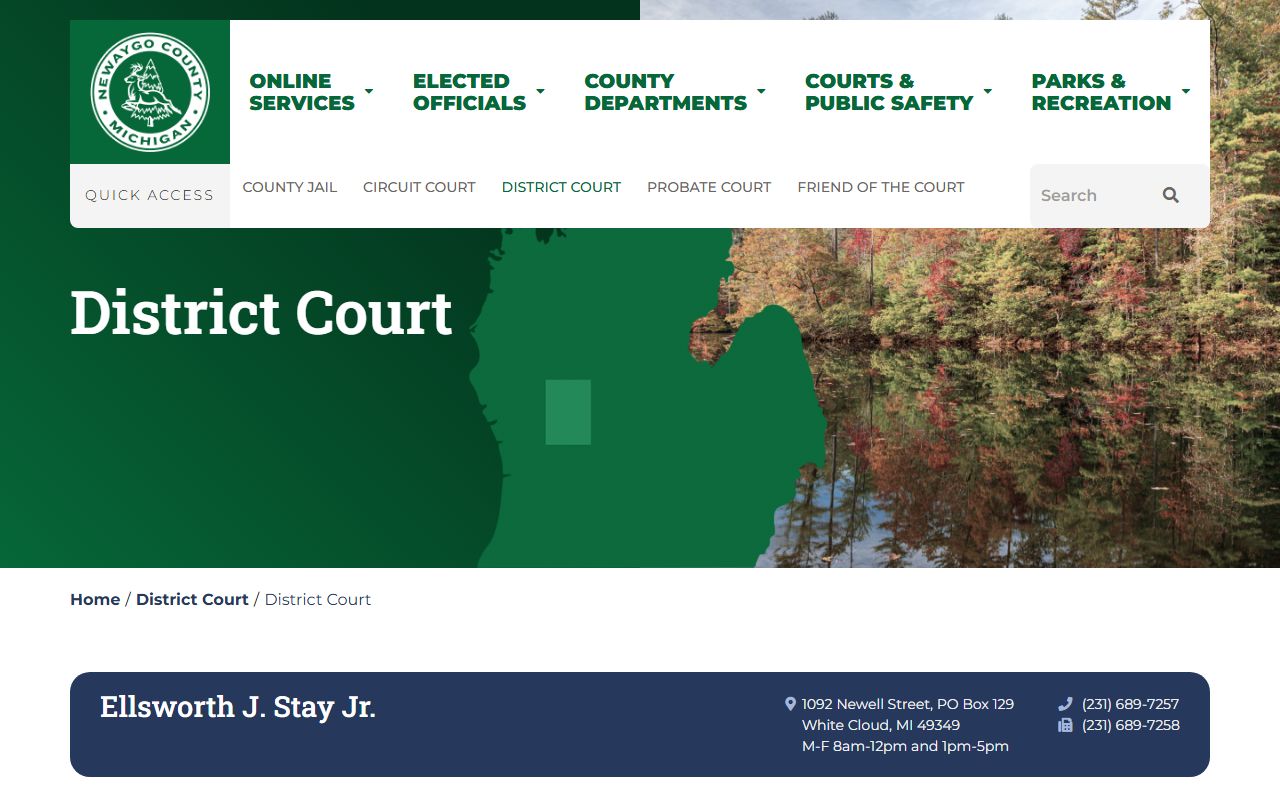
That court's docket is where the early status of a misdemeanor charge, from arraignment through plea, first appears. The common status labels below show up across both district and circuit cases.
| Status | What It Means |
|---|---|
| Pending | The charge is filed and the case is open, with no plea or verdict yet. |
| Amended / Reduced | The prosecutor changed the charge, often to a lesser offense. |
| Dismissed | A judge ended the charge, with or without prejudice to refiling. |
| Nolle Prosequi | The prosecutor formally dropped the charge and chose not to pursue it. |
Charges vs. Convictions in Lake County
Being charged is not the same as being convicted. A charge is an accusation. The state must still prove it in court, and the defendant is presumed innocent until then. A charge can be dismissed, dropped, or reduced, and a jury or judge can find a defendant not guilty. A conviction only exists after a guilty plea or a guilty verdict. Reading a Lake County charge record as proof of guilt is a common and serious mistake.
| Charge | Conviction | |
|---|---|---|
| Stage | Accusation | Guilty plea or verdict |
| Burden of Proof | Probable cause | Beyond a reasonable doubt |
| Meaning | An allegation only | Guilt established in court |
| Public Record | Yes, if not sealed | Yes, unless set aside |
Sealed vs. Expunged Charge Records
Michigan uses the phrase "set aside" for what many states call expungement. A sealed record is removed from ordinary public view but still exists. A set-aside conviction is treated as though it never happened for most purposes. The application path runs under MCL 780.621, while the automatic Clean Slate route runs under MCL 780.621g. The State Police Clean Slate FAQ explains the waiting periods and the offenses that never qualify.
| Sealed | Set Aside (Expunged) | |
|---|---|---|
| Visibility | Removed from ordinary public access | Treated as though it never occurred |
| Law Enforcement | Limited access remains | Very limited, nonpublic |
| Eligibility | By court rule or order | Application or automatic Clean Slate |
Lake County Charge Codes and Severity Levels
Every charge points to a statute. The record ties each count to a Michigan Compiled Laws section and shows the severity level. Michigan sorts offenses into felonies, misdemeanors, and civil infractions. Felonies carry the longest possible jail or prison terms. Misdemeanors are lower-level crimes. Civil infractions, such as most traffic tickets, are not crimes at all. A single arrest can produce several separate charges, each with its own code and level. Case numbers also carry a two-letter suffix, like CF for a felony criminal file, that signals the case type.
Felony charges bind over from the district court to the 51st Circuit Court, which serves Mason and Lake Counties, described on Mason County's 51st Circuit Court page.
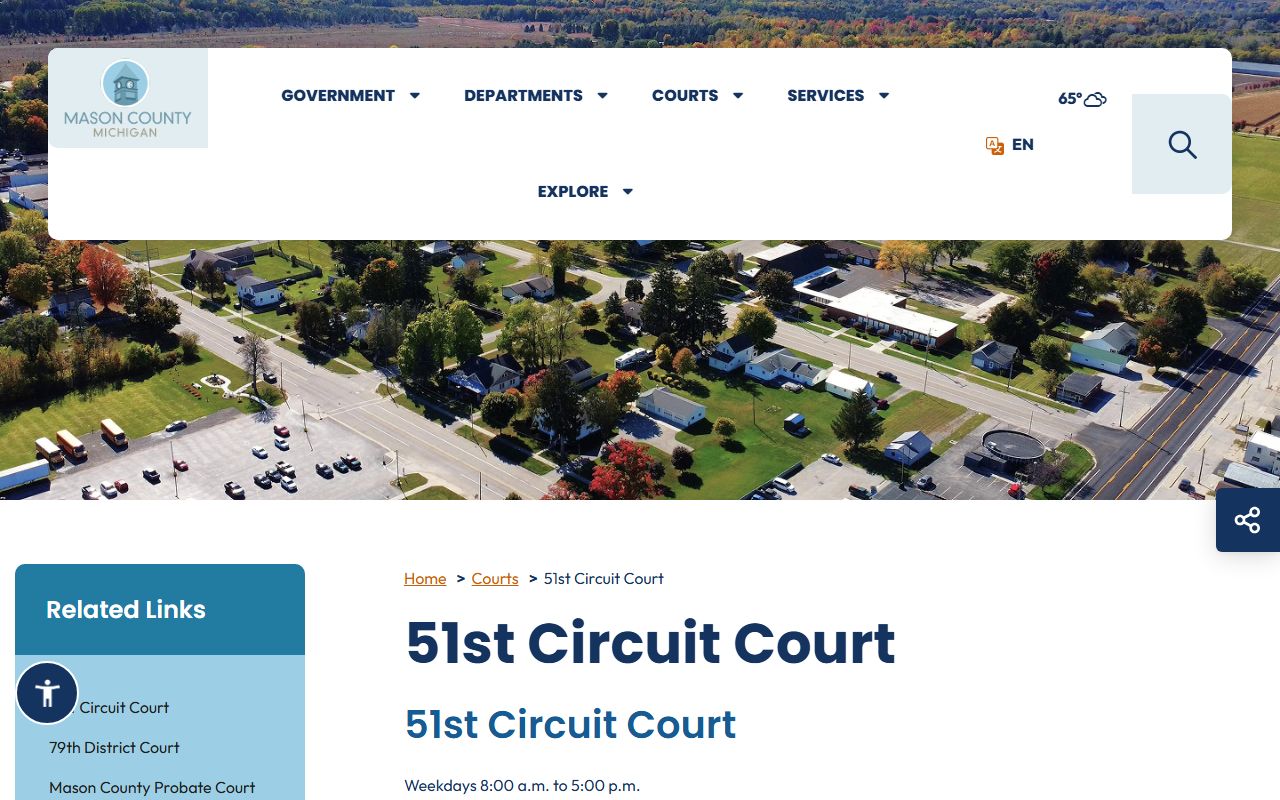
That page explains the shared circuit that hears Lake County felony cases after the Information is filed. The charge code stays with the case as it moves from the 78th District Court to Circuit Court, though the severity label can change if a charge is amended along the way.
Statewide Charge and Criminal History Lookups
Charges filed in Lake County can roll up into a statewide criminal history. The Michigan State Police keep that database. Its public search tool, ICHAT, returns Michigan felony and serious-misdemeanor conviction records by name through the MSP criminal history records page. ICHAT is a criminal-history search, not a court case file. The State Police note that it does not include warrant information or suppressed records. For the court's own file and the live charge list, MiCOURT and the Lake County Trial Court remain the source.
The two records answer different questions. A criminal-history search shows convictions across the state. A court case search shows the charges as filed in one case, including counts that were later dropped or dismissed. A person who sees an old case still listed can check the court file for its status and the State Police record for its criminal-history status.
Background Check Considerations
A casual name search is not the same as a background check for hiring or housing. Employment, tenant, and licensing screening fall under the federal Fair Credit Reporting Act. Those reports must come from a regulated consumer reporting agency and follow strict accuracy and dispute rules. A public charge lookup on a court portal carries no such protections. It can also miss updates, such as a dismissal or a set-aside, that change what a charge really means.
Important: This site is not a consumer reporting agency under the FCRA, and its information may not be used for employment, tenant, credit, or other FCRA-regulated decisions.
Restricted Charge Records in Lake County
Some charge records stay off the public portal. Juvenile charges are strongly restricted under MCL 712A.28, so a public juvenile charge lookup is not available. Set-aside convictions drop out of ordinary public criminal-history access. Search warrants and active investigations may be sealed until an arrest or a court unsealing. Court rules also protect personal details, such as dates of birth and Social Security numbers, in public filings under MCR 1.109.
A dismissed charge may still show on the docket, marked as dismissed, unless it is later sealed. Michigan's open-records framework favors access to public court records under MCL 15.233, yet the court rules on nonpublic and protected material set real limits. When the online view stops short, the Lake County Trial Court office holds the full file and can explain what is public.