
What Lake County Probate Court Covers
The Lake County Probate Court handles the legal work that follows a death and the court oversight of people who cannot manage their own affairs. Its docket runs from small estates to complex trusts. Common matters include decedent estates, wills, guardianships, conservatorships, trust disputes, and mental-health proceedings. Each type creates its own file, and each file can hold petitions, orders, and reports built up over months or years.
Michigan runs three main trial courts, and Lake County uses all three. Circuit Court hears felonies, larger civil suits, and divorce. District Court takes traffic, misdemeanors, and small claims. Estates, wills, guardianships, and conservatorships belong to the Probate Court. All three sit under the Lake County Trial Court umbrella at the county building in Baldwin, so a single phone line can point you to the right division.
Probate work is often personal. It can decide who inherits, who cares for a child, and who controls the money of an adult who can no longer decide for themselves.
Probate Terms Defined
Probate paperwork leans on words most people rarely use. A quick glossary makes the filings easier to read, whether you are opening an estate or just checking a case. These terms appear on petitions, orders, and letters the court issues.
- Testator
- The person who made the will. The estate follows the testator's written wishes when a valid will exists.
- Executor
- The person named in the will to carry out its terms, pay debts, and hand out property. Michigan often calls this role the personal representative.
- Personal representative
- The court-appointed person who settles an estate, whether or not there is a will. The court grants this role through letters of authority.
- Letters of authority
- The court document that proves a personal representative has the legal power to act for the estate, such as closing accounts or selling property.
- Intestate
- Dying without a valid will. State law then decides who inherits and in what shares.
- Guardianship
- A court order giving one person legal power over the personal care of another, such as a minor or an adult who cannot care for themselves.
- Conservatorship
- A court order placing one person in charge of another's money and property, with duties to inventory assets and file accounts.
Lake County Probate Court Contact
The Lake County Probate Court is part of the Lake County Trial Court and shares the county building in Baldwin. The county Probate Court page lists contact details tied to Suite 100 and Suite 300, with one shared phone line. Judge David M. Glancy was appointed to the Lake County Probate Court in April 2023, after the vacancy left by Judge Mark S. Wickens, according to the state's official appointment release.
Lake County Probate Court
800 Tenth St, Suite 100 / Suite 300
Baldwin, MI 49304
(231) 745-4614
Fax: (231) 745-6233
Mon to Fri 8:30 AM to 5:00 PM
The court sits alongside the Lake County Trial Court landing page, which links interpreter requests, ADA requests, and the state's SCAO probate forms. Call ahead to confirm which suite handles your filing.
How to Search Lake County Probate Records
There is no probate-only database for Lake County, so a search often blends online tools with a call or a visit. The statewide case portal is the first stop, and the court office fills the gaps for older or paper files. Probate estate details may be public, but medical and protected-person data can be withheld.
- Open MiCOURT Case Search, accept the terms, and clear the robot check. The portal can include probate cases when the court participates, so try a party name or file number.
- Call the Probate Court and Trial Court office at (231) 745-4614 for file access, certified copies, hearing dates, and records that are not online.
- Visit the counter at the Lake County Trial Court, 800 Tenth Street in Baldwin, and ask for the suite that holds the file you need.
- Mail a request with the case name and number, the document you want, your contact details, and the fee. Confirm the current amount by phone first.
- Download the right SCAO probate form through the Trial Court page when you plan to open an estate or petition for a guardian.
Note: MiCOURT is a starting point, not a complete file, so confirm anything you plan to rely on with the Probate Court office directly.
Estate and Will Records in Lake County
A decedent estate file is the heart of most probate cases. It opens with a petition and the appointment of a personal representative, then grows as the estate moves toward closing. Typical documents include the will, letters of authority, an inventory of assets, accountings, creditor notices, court orders, and a closing statement. Wills may arrive for admission, for safekeeping, or as certified copies pulled later for heirs.
Estates often lean on records the Probate Court does not hold. A death certificate and marriage records come from the County Clerk and Register, not the court file. Michigan sets rules for those vital records, including the marriage-license waiting period at MCL 551.103a, which sits with the clerk's vital-record duties.
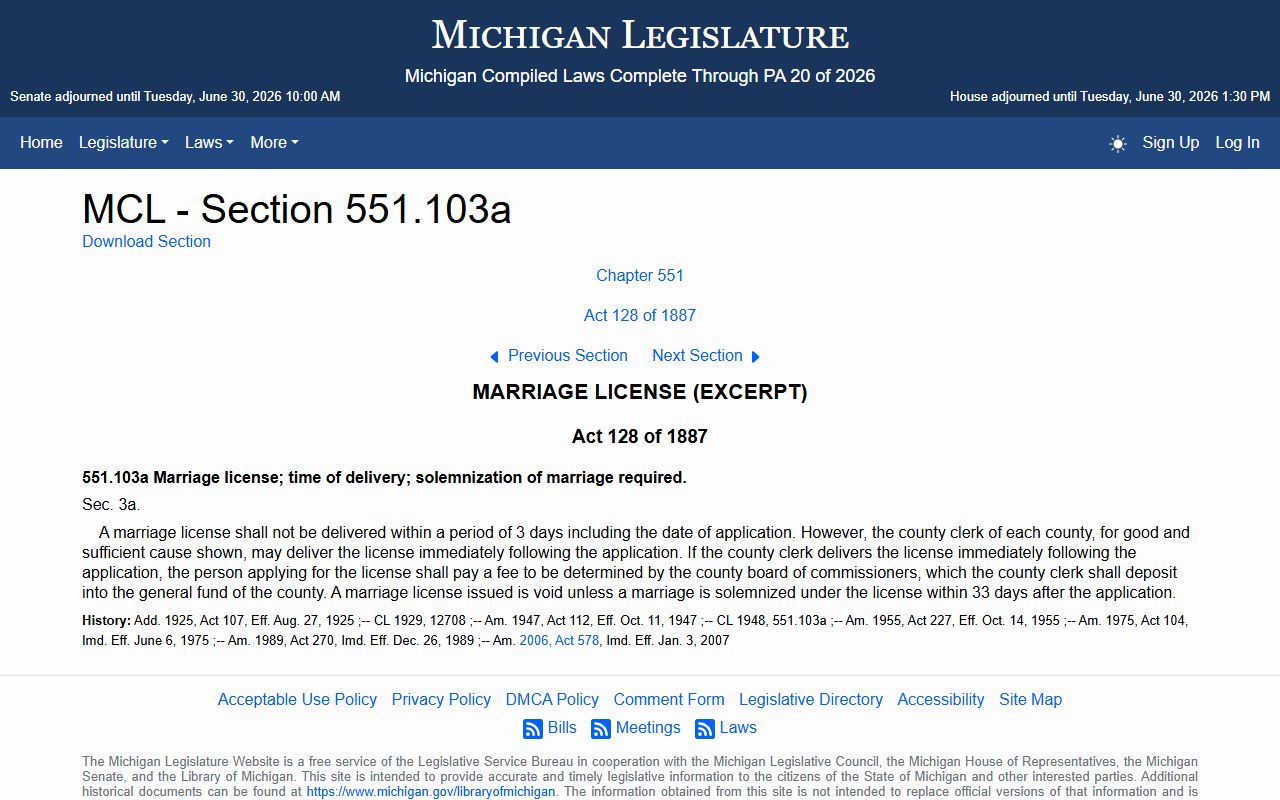
That connection matters because estate paperwork often needs a certified death or marriage record before the court will act. For those vital-record copies, the County Clerk and Register in Suite 200 is the correct office, while the estate case itself stays with the Probate Court.
Guardianships and Conservatorships
Guardianship and conservatorship cases protect people who cannot fully protect themselves. A guardianship covers personal care, such as housing and medical decisions, for a minor or an incapacitated adult. A conservatorship covers money and property, with the conservator required to inventory assets, post a bond when ordered, and file regular accounts. Lake County probate files in this group can hold petitions, reports, orders, and reviews that run for years.
Some related files carry heavy privacy protection. Adoption records, which can overlap with family and probate work, are confidential under Michigan law. That release is governed by MCL 710.67, Michigan's adoption-record confidentiality statute.
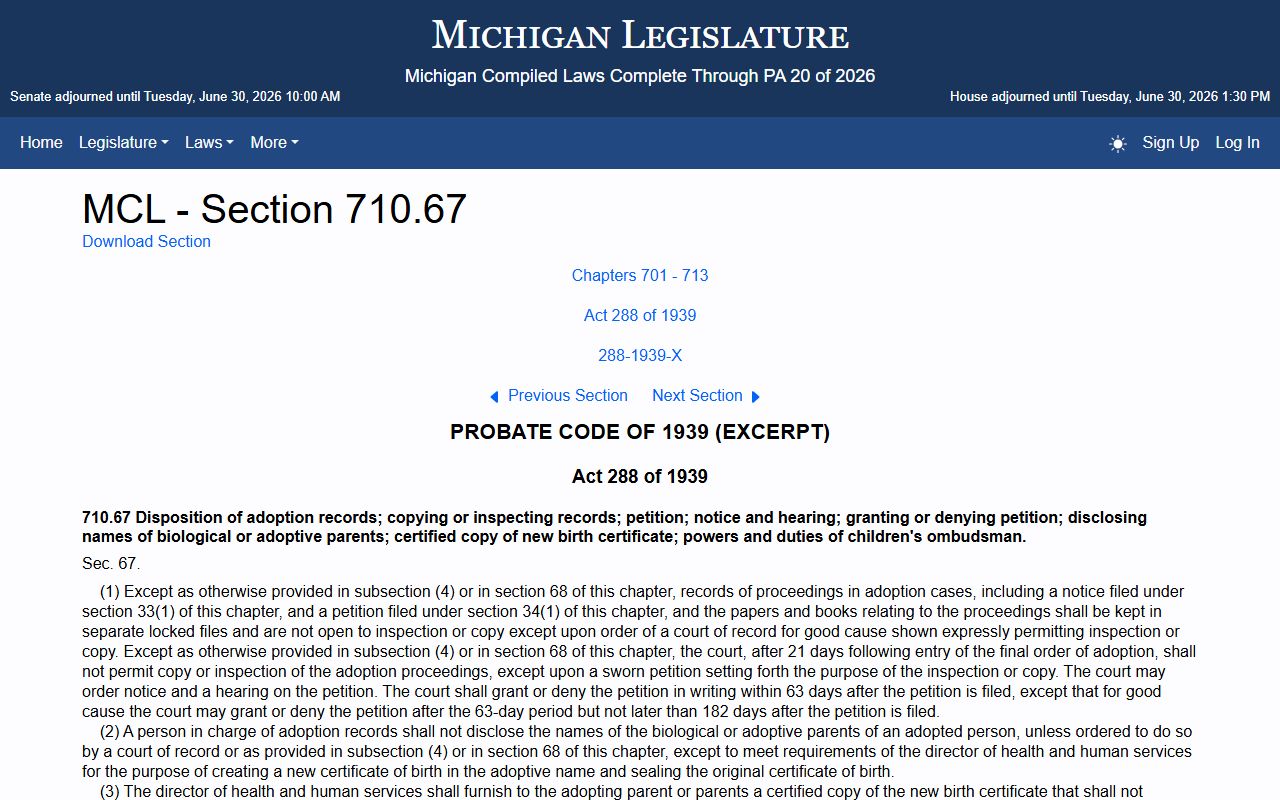
Because adoption and minor-guardianship files can be sealed or limited, access often requires party status, an attorney, or a court order. A public search may show that a case exists without opening every document inside it.
Probate Filing and Inventory Fees
No Lake County-only probate fee list was found on the county pages, so estate costs follow the statewide Michigan framework. The most notable charge is the inventory fee, which the Probate Court must charge and collect based on the value of the estate's assets. It is treated as an estate administration expense and paid from estate money, not by the person filing out of pocket.
The figures below reflect Michigan's statewide probate fee context, not a Lake County-specific schedule. Confirm the exact current amounts and payment methods with the Probate Court before you file.
| Item | Fee Context (Michigan Statewide) |
|---|---|
| Inventory fee | Required under MCL 600.871; based on estate asset value |
| Fee waiver | Inventory fee cannot be waived under MCR 2.002(A)(2) |
| Who pays | Paid from estate assets as an administration expense |
| Amount source | Michigan Courts probate fee table and inventory calculator |
To estimate the inventory fee before filing, the state offers an online tool. The Michigan Courts probate inventory calculator explains collection of the fee under MCL 600.871.
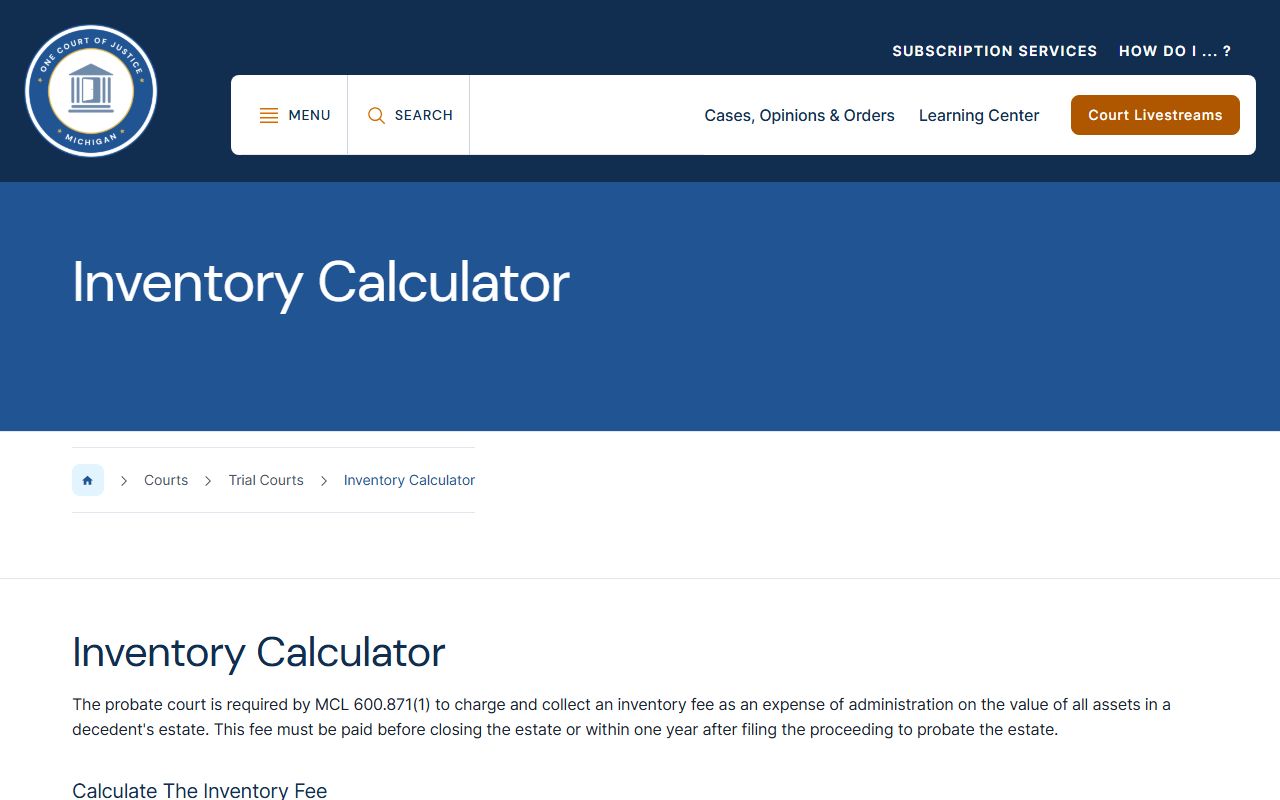
The calculator lets a personal representative enter the estate value and see the fee owed. For copy fees and accepted payment methods in Lake County, the Probate Court office at (231) 745-4614 has the final word.
Small Estate Affidavit Option
Not every estate needs a full probate case. Michigan law provides a small-estate route that lets certain assets pass by a sworn affidavit instead of a lengthy court file. This can save time and cost when the estate is modest and fits the statute's limits. It is a state process, so Lake County heirs still confirm the current forms and dollar thresholds with the Probate Court.
The affidavit path comes from state law. Michigan's small-estate collection rule sits at MCL 700.3982, the route that lets modest estates skip a full case.
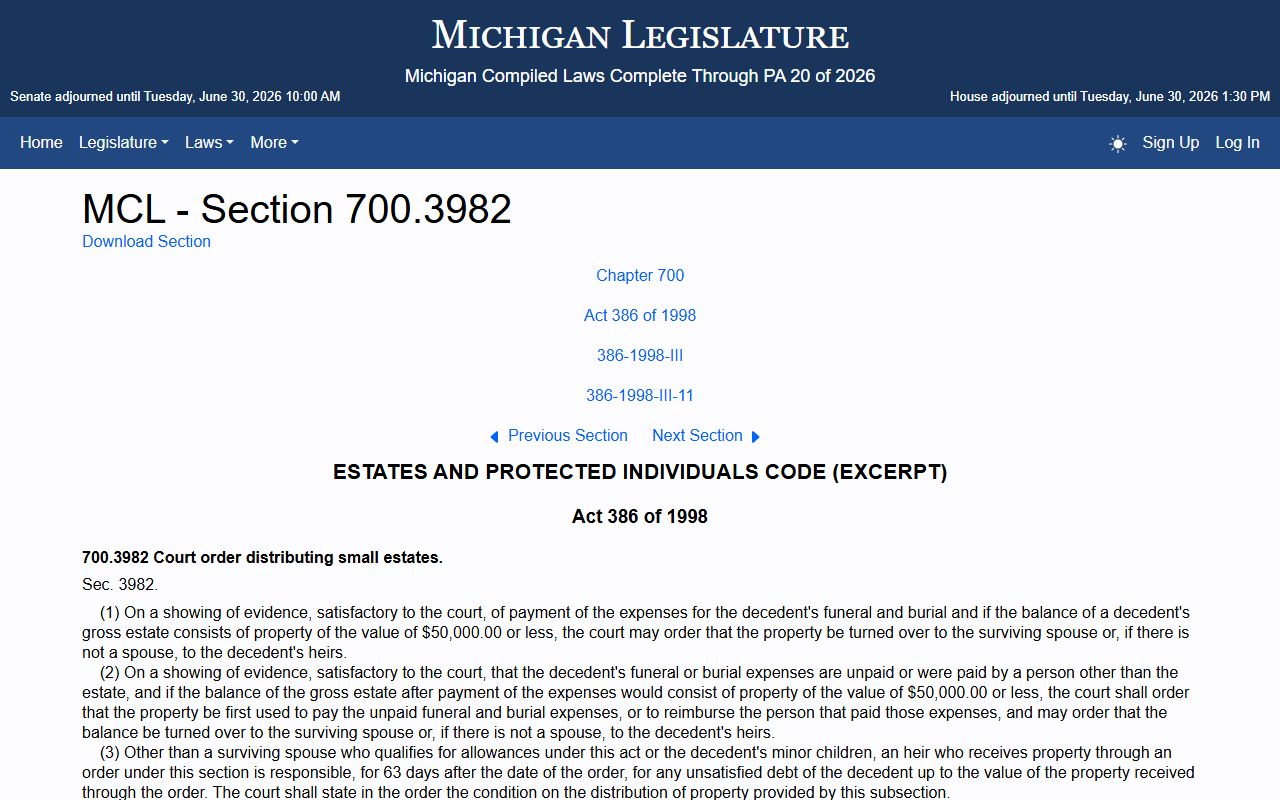
That rule sets the collection-by-affidavit process for small estates. Because thresholds and waiting periods change, call the Lake County Probate Court to check what applies now and what the filing or copy fee will be.
Restricted Lake County Probate Files
Public access to probate records has real limits. Mental-health and developmental-disability proceedings are not ordinary public files, and treatment details should be treated as private unless the court authorizes access. Minor guardianship files, protected-person medical information, and sealed matters also fall outside a routine public search. A portal may confirm a case exists while keeping its sensitive documents closed.
Juvenile matters carry their own confidentiality rules that can touch probate work, such as a minor guardianship. Michigan's juvenile-record law sits at MCL 712A.28, which restricts public access to many juvenile records.
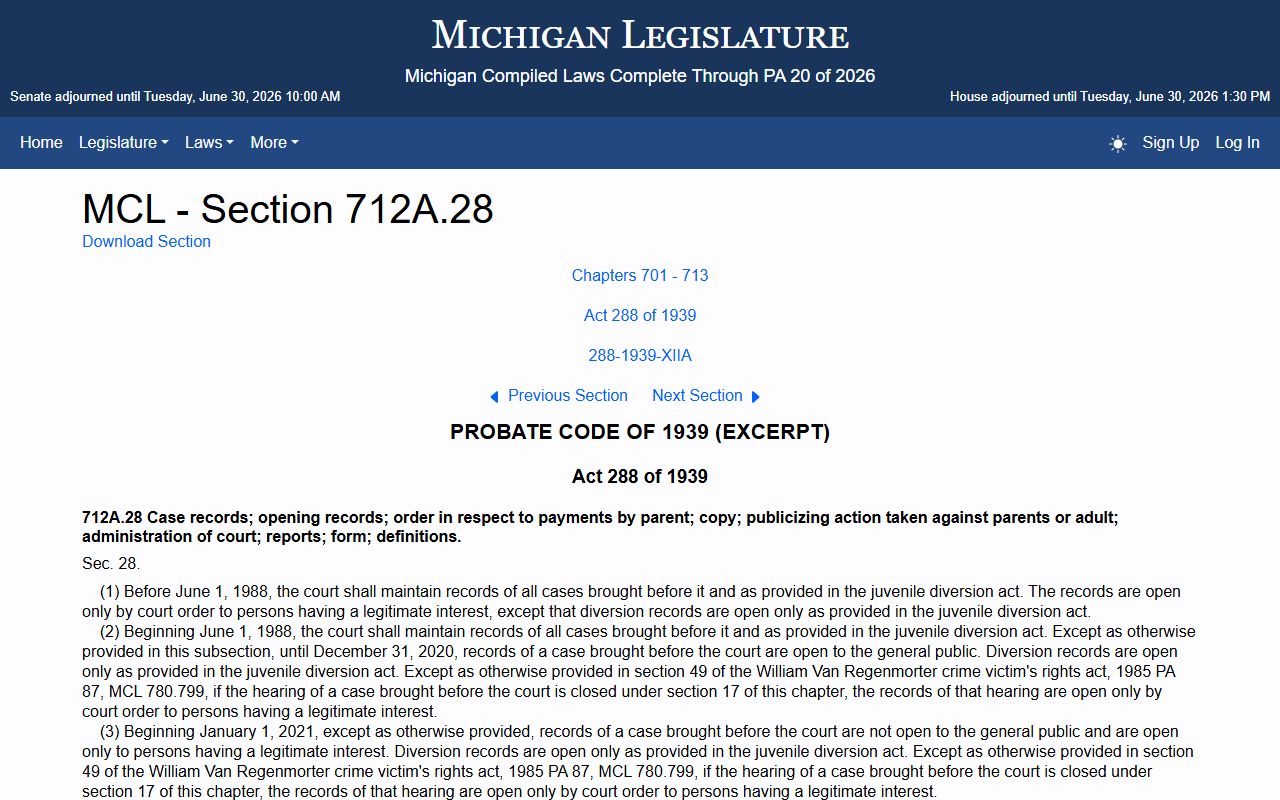
That protection is why minor-guardianship and juvenile files rarely open to a routine search. For a full picture of what is public across the trial courts, the Lake County court records page maps the same access rules to other case types. When a probate file is restricted, access usually requires party status, an attorney appearance, or a court order.